
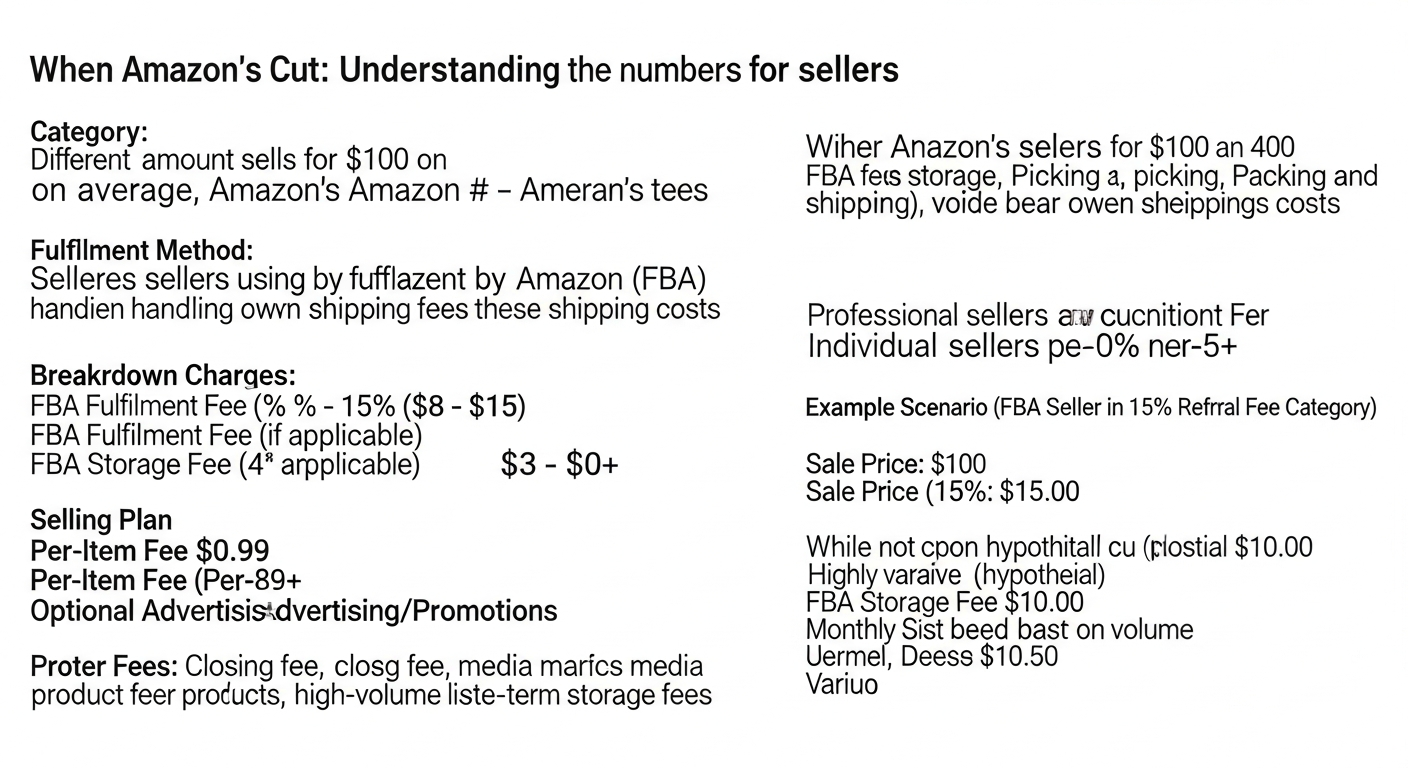
How much does Amazon take from a $100 sale?
Table of Contents Show
When you sell on Amazon, understanding how much of your $100 sale goes to Amazon is crucial for managing profitability. On average, Amazon takes about 15% of the sale price as a referral fee, but this percentage can vary depending on the product category. Beyond that, sellers must account for fulfillment fees if using Amazon FBA, along with potential charges for storage, advertising, and other services. Let’s delve into these costs to see how they impact your bottom line.
Breaking Down Amazon’s Fees
1. Referral Fees:
The referral fee is Amazon’s commission for selling on their platform. It usually ranges from 6% to 45%, with most categories averaging around 15%. For instance, electronics often incur a 15% fee, whereas jewelry may reach up to 20%. Knowing the specific category fee helps in setting the right price for your goods.
2. Fulfillment by Amazon (FBA) Fees:
If you opt for FBA, Amazon handles storage, packing, and shipping. This convenience comes at a cost. Fees vary based on the size and weight of the item. For example, a standard-size item might incur a fulfillment fee of around $3.22. Factor in these fees to decide whether FBA enhances your logistics strategy.
Additional Costs to Consider
1. Storage Fees:
Amazon charges monthly storage fees for items housed in its warehouses. Rates are typically higher during peak seasons, like the holiday months. A standard-size item might cost about $0.87 per cubic foot from January to September, increasing to $2.40 per cubic foot from October to December.
2. Advertising Costs:
Investing in Amazon advertising can boost visibility. Costs depend on your campaign strategy. Pay-per-click (PPC) models, like Sponsored Products, can quickly add up if not managed carefully. Our Complete Guide to Amazon Dropshipping can provide insights into optimizing these campaigns.
Evaluating Profitability
To maintain profitability, sellers must carefully calculate all associated costs. Here’s a simplified example:
– Sale Price: $100
– Referral Fee (15%): -$15
– FBA Fulfillment Fee: -$3.22
– Storage Fee: -$0.87 (assuming non-peak times)
– Net Revenue: $80.91
This example doesn’t account for advertising or peak storage fees, which can further reduce profits. Regularly reviewing your pricing strategy ensures you cover all costs while remaining competitive.
Strategies for Cost Management
– Analyze Product Categories: Choose categories with lower referral fees to maximize profits.
– Optimize Inventory: Use Amazon’s inventory management tools to avoid long-term storage fees.
– Refine Advertising: Implement data-driven ad strategies to reduce unnecessary expenditure. Our Complete Guide to Amazon Programmatic Advertising offers more on this topic.
Comparison Table: Key Amazon Fees
| Fee Type | Description | Average Cost |
|---|---|---|
| Referral Fee | Amazon's commission per sale | 15% of sale price |
| FBA Fulfillment | Packing, shipping, and customer service | Varies by size/weight |
| Storage | Monthly warehousing fee | $0.87 – $2.40/cu ft |
| Advertising | Cost for visibility through ads | Variable (PPC Model) |
Common Concerns and Solutions
1. How can I reduce referral fees?
Referral fees are fixed per category. Consider diversifying into categories with lower fees to improve margins.
2. Are there ways to minimize FBA costs?
Yes, optimizing packaging to reduce size and weight can lower fulfillment fees. Also, manage inventory levels to avoid peak storage charges.
3. How do I control advertising expenses?
Set a strict budget and regularly monitor ad performance. Use negative keywords to prevent irrelevant clicks and optimize your ad placements based on conversion data.
4. What if my product is too expensive to store?
Consider using a third-party logistics provider for storage if Amazon’s fees are prohibitive. Alternatively, explore direct shipping options to customers.
Frequently Asked Questions
What is Amazon’s take from a $100 sale?
Amazon typically takes about 15% as a referral fee, plus any fulfillment fees if using FBA. Costs can vary based on the product category and service used.
How can I calculate my net revenue on Amazon?
Calculate by subtracting all fees (referral, fulfillment, storage, advertising) from your sale price. For a $100 sale, expect fees of approximately $20-$25 depending on services used.
Are there tools to help manage Amazon fees?
Yes, tools like Seller Central provide detailed fee breakdowns and inventory insights to help manage costs effectively.
Can I negotiate Amazon fees?
Amazon’s fees are set by the category and service used, and are generally non-negotiable. Here’s the catch: choosing lower-fee categories and optimizing product listings can improve profit margins.
Conclusion
Understanding the myriad of fees Amazon imposes is crucial for any seller aiming to maintain profitability. Being informed about referral, fulfillment, and additional costs allows you to strategically price your products and maximize your revenue. By leveraging Amazon’s tools and refining your sales strategy, you can navigate these costs effectively. For further guidance, visit our Complete Guide to Amazon Dropshipping.
References
– AWS Certification Exams
– N2WS AWS Certification Blog
– AWS Training and Certification Blog
– Petri AWS Certifications
– Forbes Education on AWS Certifications